Hands, not slides
Training
Everything in the range eventually needs a soldering iron and somebody who is not afraid of it. That person is easier to become than the internet suggests, and we would rather teach it than keep repairing it for you.
What gets taught
Three things, in the order they stop being frightening.

Soldering
Irons, tips, temperature and flux. Through-hole first, then surface mount. Why a joint that looks fine fails a week later, and how to see the difference before it does. Fume extraction and eye protection are not an afterthought here — they are the first ten minutes.
You leave able to make a joint that survives a crash.
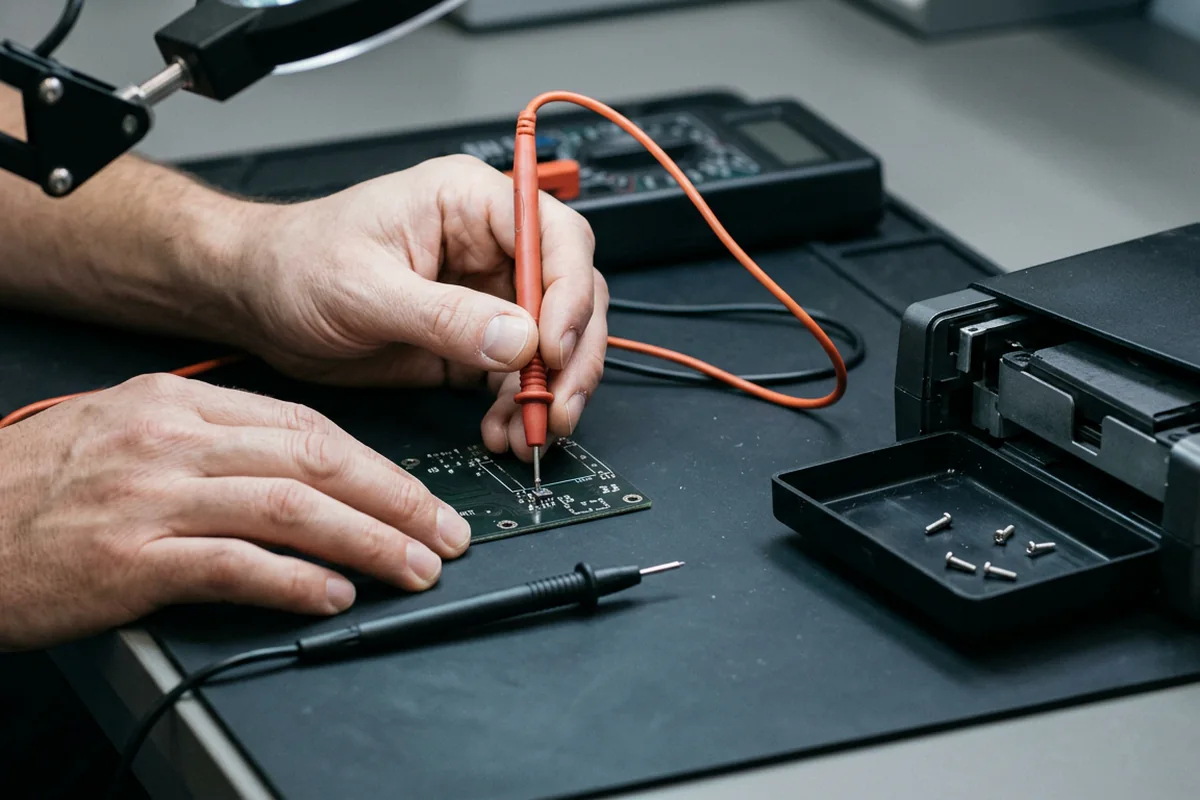
Repair
Finding the fault before touching anything. Reading a board, tracing a circuit, measuring instead of guessing, and testing a lithium cell without turning it into an event. Knowing which damage is worth fixing and which is the end of that component is half the skill.
You leave able to say what is wrong, and whether it is worth it.
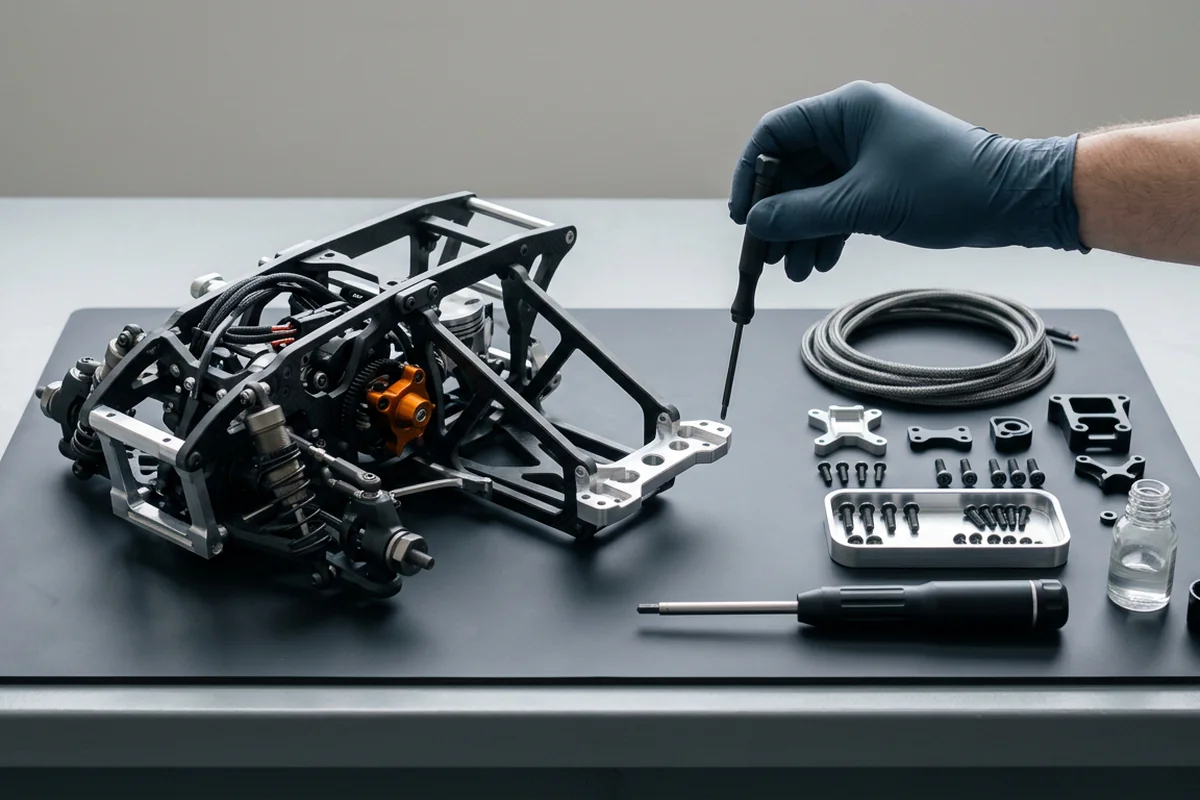
Assembly
Building an airframe or a drivetrain from parts: what order to do it in, what to torque, what to secure with thread lock and what never to, how to route a wire so it does not chafe through in a month, and what to check before the first run.
You leave able to build one and trust it in the air.
Starting points
Who it is for
Three honest places to begin, rather than "all levels welcome" — which tells nobody anything and reassures nobody.
- Never held an iron
- No electronics background assumed and none needed. Start at soldering; the other two subjects will still be there afterwards.
- Something of yours broke
- You own the thing and would rather not post it to a stranger. Bring it along. Repair assumes you can already solder, or that you did soldering first.
- Building from parts
- You have the components and the confidence, and want the part nobody writes down: the order, the torque, and the checks that separate a maiden flight from a recovery walk.
The shape of it
How we intend to run it
None of this has been run yet, so read the following as intent rather than description. Contact with actual people will correct some of it.
At a bench, on real boards
- One bench per person. Nobody watches over a shoulder.
- Work on real hardware from the first hour, not on a practice coupon.
- Irons, extraction, meters and consumables provided.
- Small groups, so that a question can be asked out loud.
- Taught in English.
What to bring
- Nothing, if you have nothing. Everything needed is on the bench.
- The broken thing, if you have one. It makes a better lesson than ours.
- Glasses if you wear them for close work. Magnification is provided.
- No prior electronics for soldering. Soldering, or its equivalent, for repair.
Expectations
What it is not
Not a qualification. There is no piece of paper at the end. What you leave with is the ability to do it, which is harder to fake and worth more.
Not a lecture. If you wanted to watch somebody solder there is already an enormous amount of video on the subject, much of it good.
Not a repair service in disguise. We are not fixing your machine while you watch — you are fixing it while we watch.
Not conditional on owning anything of ours. Bring another brand's hardware and nobody will mind.
Questions
Asked already
Do I need to know anything first?
Not for soldering. Repair and assembly assume you can already make a joint, whether you learned that here or somewhere else.
What will it cost?
Not decided. When it is, the people on the list hear it before the internet does.
Where will it happen?
Wherever enough of the list turns out to be. That is the honest answer and the reason the list exists — we are not going to rent a room and hope.
How long does it take?
Each subject is built to stand on its own and to be taken in any order. How long that turns into depends on the group, and we will not invent a number before we have taught one.
Is it safe to learn on lithium cells?
It is, when it is taught. Handling, storage, charge state and what a damaged cell looks like are part of the repair subject rather than a warning label at the end of it.
Can a fourteen-year-old come?
That depends on where it ends up running and what that country requires of a minor at a workbench. Ask on the form and we will find out properly rather than guess.
Where this stands
An intention, not a timetable.
This is an intention, not a timetable. There is no fixed date and no fixed room: a group opens where enough of the list turns out to be.
What exists is the plan and a list. Leave your details and you go on it. When there are enough people in one country to make a group worth running, everyone on the list hears about it before anybody else does.
Contact
Ask us something.
Tell us what you are after and where you are. A person reads it and a person answers it.
- Answered by a person, not an autoresponder.
- Your details stay in the EU and are used for this reply only.
- No newsletter, no tracking, no third parties.
Or write to support@esca.toys.