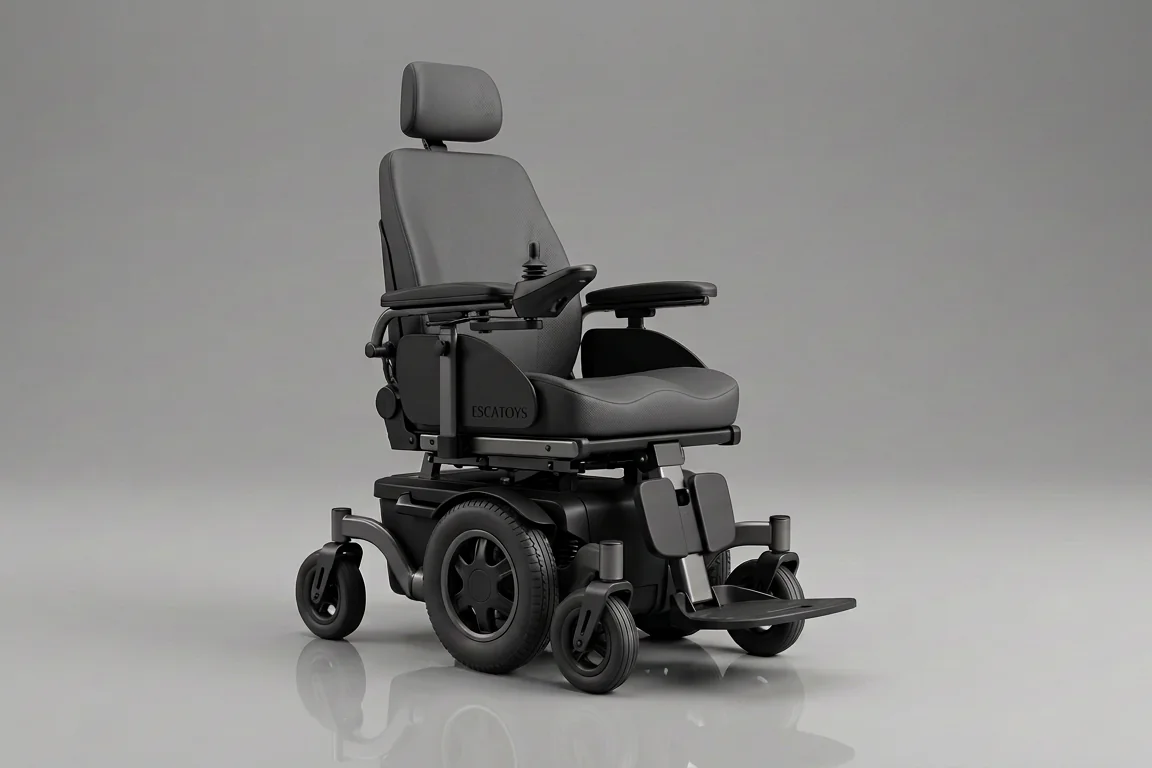
Everyday powerchair
Sized for doorways, lifts and kerbs, and built to be sat in for a whole day rather than for an errand.
Details on requestEveryday equipment
A powered wheelchair is not transport that happens to be accessible. It is the equipment somebody uses to get through an ordinary day, and the rules it answers to are written on that understanding.
The range
Sized for doorways, lifts and kerbs, and built to be sat in for a whole day rather than for an errand.
Details on request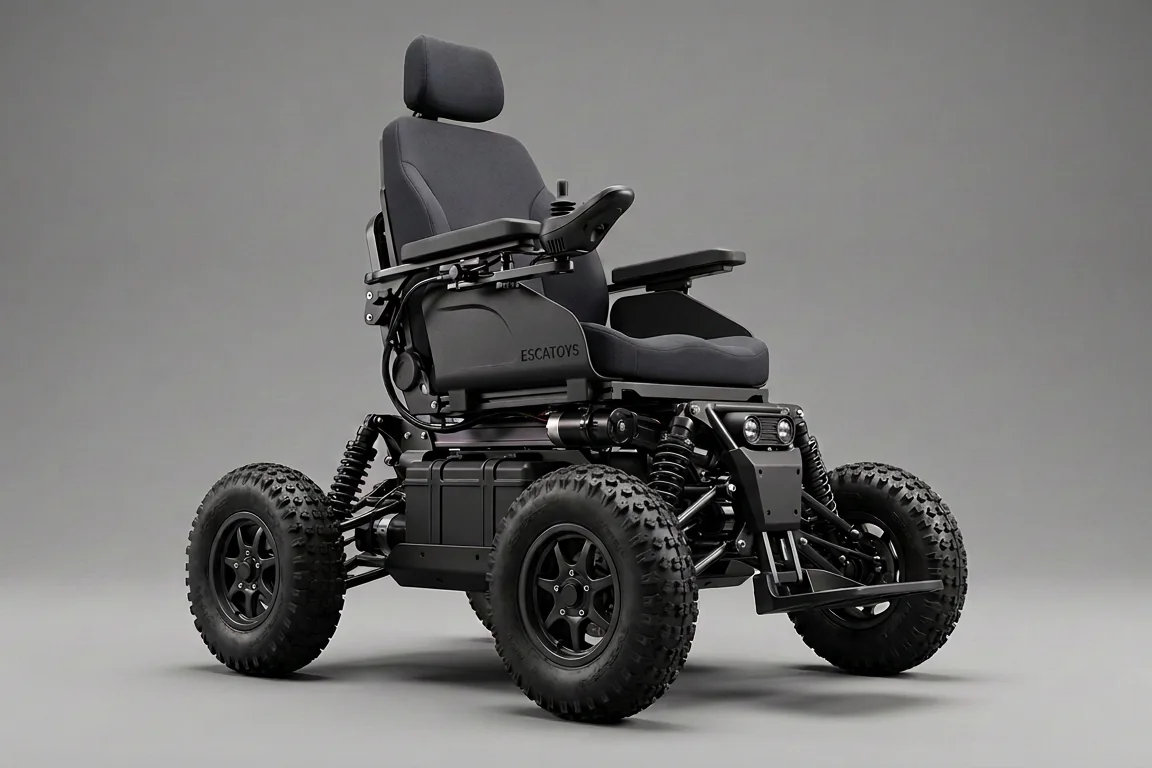
Larger wheels, longer travel and real ground clearance, for surfaces nobody ever got round to levelling.
Details on requestWhich rules apply
In the European Union a powered wheelchair is a medical device and falls under Regulation (EU) 2017/745. That decides who may place one on the market, what technical file has to exist behind it, and who answers for it afterwards.
The product standard is EN 12184, which sorts powered wheelchairs by where they are meant to be used — indoors, indoors and outdoors, or outdoors. The ISO 7176 series covers the testing behind that: stability, braking, range, obstacle climbing.
Fit matters at least as much as the specification. Seat width, cushion, backrest and the position of the control are set to a person by somebody qualified to do it. Nothing on a web page replaces that, and we will not pretend otherwise.
Whether a chair is funded, reimbursed or prescribed at all is decided by your own member state's health system, and the answer differs widely across the Union.
The battery is regulated on its own account under the EU Batteries Regulation 2023/1542, and moving one is governed by UN 38.3.
We hold no documentation for any of this, so this page claims none. What is written above is which rules exist, not a statement that we have satisfied them.
Contact
Tell us what you are after and where you are. A person reads it and a person answers it.
Or write to support@esca.toys.